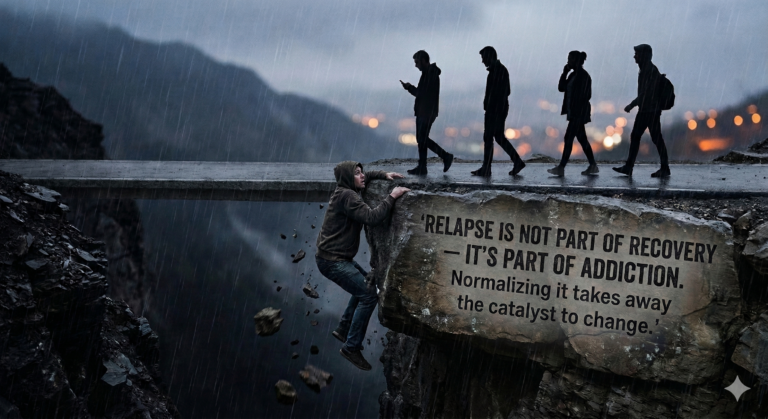
The expression “Relapse is part of recovery” has been around for a while now, but it has begun to weigh on me. I have never liked that expression and felt mental health professionals just used it to make clients comfortable and that relapsing was an okay event. Well, it is not okay, and relapsing is failing to remain sober. I prefer “Relapse is Not Part of Recovery-It’s Part of Addiction.”
I was watching the movie “Beautiful Boy,” and a rehab worker tells a client’s father, after he relapses, that it is part of recovery. His response was epic. He said that is like saying “Crashing is part of pilot training.” I understand why professionals say it to people. They are trying to ease the shame and guilt that surrounds relapsing, but shame and guilt need to be felt. We need to own it before we can resolve it.
Relapsing is part of the addiction process, not the healing or recovery process. Parts of recovery are learning new ways to deal with life’s stressors. It is about learning new tools and interventions to apply when facing triggers, cravings, traumas, and any other hurdle(s) life throws at you.
Relapsing needs to stay on the addiction side of things, and the darkness it brings with it. Let us call relapsing what it is, failing to remain sober. Failing something is not a curse word and does not mean the person that failed something is a failure! But it is something that warrants a change and an understanding about what happened.
In my mental health profession, too many therapists sugarcoat words and phrases that need to be said in context, such as the title of this blog. A friend equated my blog’s title to the new wave of giving participation awards to all participants in a competition. Why? For what reason? Of course, that is a rhetorical question. I know we want people to feel a part of something. Well relapsing is not a positive event and is something that needs to be confronted with and addressed.
Labeling relapses as a “normal” recovery event is not therapeutic in any way, shape, or form. It normalizes something that should not be normalized. When you normalize something that calls for a change, you take away the catalyst to change. With relapses come shame and guilt and I have already addressed the need to own it and learn how to deal with it. There is no catalyst for change by easing the guilt and making it okay.
The guilt and shame of relapses will be felt by clients regardless of how we frame it, so let us call it what it is, a setback. When we normalize it, clients get comfortable with it. However, I do recognize the need to find a balance between the destructive and constructive forces of shame and guilt. Too much guilt and shame can be debilitating, and too little can be a sign of no ownership in the relapse.
What triggered me to write this blog are professionals in my field who insist on always easing the pain and negative emotions someone who relapses feels. The problem is those negative emotions need to be felt and not glazed over to ease the pain of the event. That is the problem now a days. Therapists have come to normalize symptoms such as anxiety, depression, and in this case relapses as problems in and of themselves. They are not problems, but symptoms of problems fueling them.
The point of this blog may be a matter of semantics, but when you look closer, you will see it is a systemic problem in the field of mental health. Too many professionals are playing out their own unresolved issues in therapy and have difficulty letting clients feel the anxiety, depression, shame, and guilt that come with relapses. These emotions will help fuel the change needed to understand what is driving the relapses in the first place.
This adage of “relapse is part of recovery” does not really fool anyone. The client feels the pain of the relapse and the professional saying “it is part of recovery” to them is only doing it to reframe something to sound okay. Neither one really believes it, so why say it?
There is already enough information out there that explains the number of times it may take to stay sober. Whether drugs or alcohol, we already know that it may take numerous attempts to remain sober for good. So, let us stop making relapses a part of recovery and put it where it belongs, part of addiction.
Let us stop appeasing and start challenging clients who relapse. They need to understand it is not okay and something needs to change. It is okay to embrace them and empathize with them, but do not make it seem like it is part of recovery, because it is not!
Normalizing relapses as part of recovery is not a healthy perspective at all. Every relapse poses the possibility of an OD and death. It needs to be treated as such. Same goes for alcohol abuse and the medical damage it can do.
We need to find the balance of holding relapses as setbacks and not as part of recovery, and at the same time, helping the addict to process the triggers that caused it, so it does not happen again. Let us change the adage that a relapse is part of addiction and not of recovery.
Mind, Body, Spirit…Balance! Vinnie Strumolo, CEO, LMFT