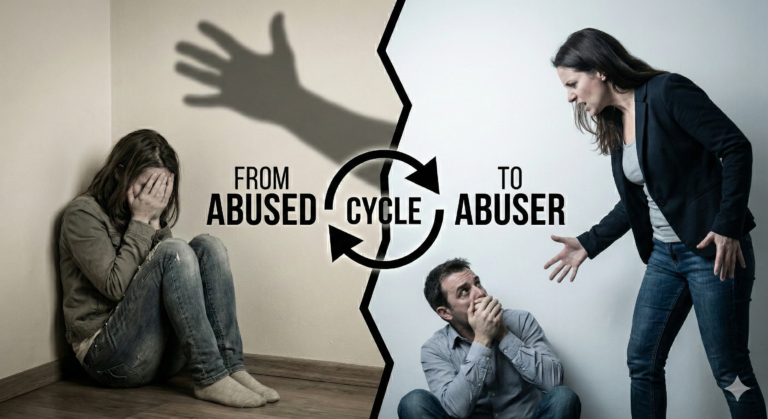
Back in the 1990’s when I was working with severely abused children, I attended a lecture where research was shared reflecting how around 50% of sexually abused children will move on to sexually abuse as well. As much as I wanted to deny that connection, I went over years of cases and found it to be accurate with all forms of abuse. So, what makes half of the abused children/adults cross the line to become abusers and some not? That is the million-dollar question and one I want to discuss in this extended blog.
After 35 years of treating clients of all ages and at all levels of care, for both addictions and mental health issues, I have come to believe that there is only one common denominator that prevents this abuse cycle from happening and that is resolution of their past traumas/life events. I have built my entire treatment approach in my Resolution Focused Therapy© (RFT) on teaching clients how to move toward resolution of their past.
I have simply applied the logic that if we resolve our past events, we have no need to continue the cycle. Sounds logical and simple, but it surely is not. In the cases I have personally treated, it would take me between 7 months to 2 years of intensive therapy, multiple times a week in a locked facility to resolve severe childhood trauma.
Resolution of our past traumas or life events prevent us from repeating them, or worse yet, becoming them! A bully does not suddenly enter the social arena and think I want to push others around or hurt them. They are simply doing what was done to them. It is a cycle that they have come to believe is “the way it is.” The problem, when they learn that it is not normal or socially accepted behavior, is how to stop it. And stopping this abuse cycle is an arduous process and one that usually takes time.
I talk in my groups about emotional reactivity as a symptom of unresolved trauma. When someone with unresolved past trauma gets stressed out, they will resort to his/her emotional age, which is usually the age where their abuse has started. So, an adult who swears he or she will never do to their children what was done to them, when stressed, will do exactly what was done to them. It is just a cycle that they do not understand or have the ability to stop. For more information about being emotionally frozen refer to my blog, https://resolutionshealthcare.com/blog/emotionally-frozen-in-time.
Many of the blogs I have written relate to the reasons we do what we do. In the case of bullying, abusing, or oppressing, my blog on “Emotionally Frozen in Time” can help those to understand that unresolved past trauma(s) freezes emotional growth, regardless of our current age. Someone’s emotionally frozen age will rear its head when stressed or angry, consequently becoming an abuser in a substantial number of people.
For all of you who may be fretting about being frozen in time let me share some examples to help you understand what I am saying here. An adult who may have been physically abused throughout his/her childhood, when stressed, will throw a tantrum like a child and abuse others. A teenager who is often beaten or demeaned by a parent, as an adult, may strike out like an adolescent who gets angry, or bullies others. I have personally treated, or did groups with hundreds, if not thousands, of clients who have been abusive to others in adulthood. Not one of them had a history of normalcy in childhood and went on to become an abuser in adulthood. It really is that simple.
I have seen and treated families who raised their children in a “normal” environment (i.e., abuse free) yet they had behavioral issues and signs of being abusers to others. In these cases, it turned out to be outsiders who infiltrated the family systems and did abuse the children. I refuse to believe that someone that abuses came from a healthy family system; it just does not happen. A “red flag” for parents should be when their children’s behaviors suddenly change in a negative manner (e.g., grades, isolation, depression, etc). There will always be a reason for a shift in behavior. Of course, change does not always reflect abuse, but it does reflect something wrong. Do not put it off to chance or make excuses for the change.
I am not writing this blog to send you into a panic about being stuck at a young emotional age for the rest of your life. Not the case! I have also coined the phrase “Slingshot Effect” in my RFT© for those I have treated and helped resolve their past trauma/life events. I have personally witnessed the sudden leaps and bounds in emotional growth once released from their past trauma shackles. In fact, I have co-authored a chapter in a textbook on one of my cases that reflected the “slingshot effect” (Strumolo and Shiendling, 1998) in one of my cases.
The point of his blog is to raise awareness of how unresolved childhood abuse issues can, and will, lead to adult abuse(r) issues when left unresolved. It is a vicious cycle that is extremely difficult to break. Just ask any domestic violence counselor.
I teach how our past impacts our present thoughts, feelings, and actions. I also teach my disagreement with those that say, “don’t let your past define you” and wrote about in another blog titled “Should We or Shouldn’t We Let Our Past Define Us?” https://resolutionshealthcare.com/blog/should-we-or-shouldnt-we-let-our-pasts-define-us. I, for one, want my past battle with a traumatic event to define who I am today. Of course, this is only because I have put it to rest and my past weakness is now my strength! I can now help others struggling with unresolved past events to find the path to inner peace.
For those who still struggle with unresolved past issues, their past is their weakness and therefore would like to believe in the adage “Don’t let your past define who you are.” However, just saying the words does not make it happen. In fact, quite the contrary, it is a belief that will make someone believe they can get past it without addressing it.
The frightening thing about this “abused to abusers” cycle is it can also generalize to families, communities, cultures, and countries. We often see countries who have been oppressed become oppressors when in power. The tendencies of groups to bully, abuse, or oppress is a typical overreaction out of fear and lack of understanding about trauma resolution.
I have always felt that our own country ping pongs from one extreme to another, or extremely liberal to extremely conservative. The more work you do toward past resolution, the more balanced you become. The more balanced you become, the less likely you are to ping pong or continue the abuse cycle. The problem with large systems is zeroing in on the cause and whether it is just human nature to overcorrect. For the purposes of this blog, we will stick to what makes an individual step across the line from abused to abuser.
The concepts I am discussing in this blog are complicated and take more learning to process all the different variables, but for our purposes, know that the abuse cycle will continue until it is brought to resolution: then, and only then, will the cycle be broken. To understand more about resolving your past trauma(s)/life event(s), read or listen to our blogs/podcasts at our website, https://resolutionshealthcare.com/ or our YouTube channel, https://www.youtube.com/@ResolutionsHealthcare/videos.
The journey to resolve your past is a road less traveled by most, and for those who do not, the cycle of abuse will continue. The work is not easy, and it may also be emotionally painful at times, but the adage “No pain, no gain” applies here. For those who seek answers to stop the cycle, keep going! The journey is worth it.
Mind, Body, Spirit…Balance!
Vinnie Strumolo, CEO, CCO, LMFT
- Strumolo, V., & Shiendling, S. (1998), A Non-traditional Treatment of Youth with Conduct Disorder. In D.A. Sabatino & B.L. Brooks (Eds.), Contemporary Interdisciplinary Interventions: For Children With Emotionally/Behaviorally Disorders (p. 655). Durham, North Carolina: Carolina Academic Press.